.svg)
Indigenous knowledge belongs with Indigenous communities.
We are committed to conducting research in a way that respects Indigenous ownership.

A different approach to OH&S research.
Research has not always respected the rights of Indigenous communities to own, guide, and protect the knowledge they share. In many systems, information is gathered, studied, and published without enough attention to who controls it or how it returns value to the people it came from.
We follow a different approach. Our work is guided by OCAP® principles, which recognize Indigenous rights to ownership, control, access, and possession of data. This ensures research is not only about Indigenous communities, but accountable to them.
Basically:
* We do not own the research.
* We are stewards of the knowledge communities share.
* The community owns, controls, and accesses its own information.
Principles that guide us.
These four principles protect Indigenous knowledge and ensure communities maintain authority over research.
Communities own their data.
Indigenous communities hold ownership of all data and information collected during research.
Communities control how data is used.
Communities decide how their data is accessed, shared, and applied in research and beyond.

Communities choose who has access.
Communities set clear boundaries about who sees their data and under what circumstances.

Communities hold knowledge.
Data is stored securely and remains in community hands, not held by external institutions.
The principles guide every stage of the process.
We applies these principles before, during, and after research takes place. This helps ensure that communities understand the work, remain involved in the process, and continue to have access to the knowledge they share.
Before Research Begins
Relationships are built and communities help define the priorities, questions, and conditions that guide the research according to Indigenous traditions and laws.
During Research
Research is carried out with community involvement, secure information practices, and a collaborative process. Knowledge is gathered with care and protected throughout the project.
After Research
Findings are shared back with the community in clear and useful ways. Community access is maintained, and the knowledge created can support future decisions, prevention, funding, and action.
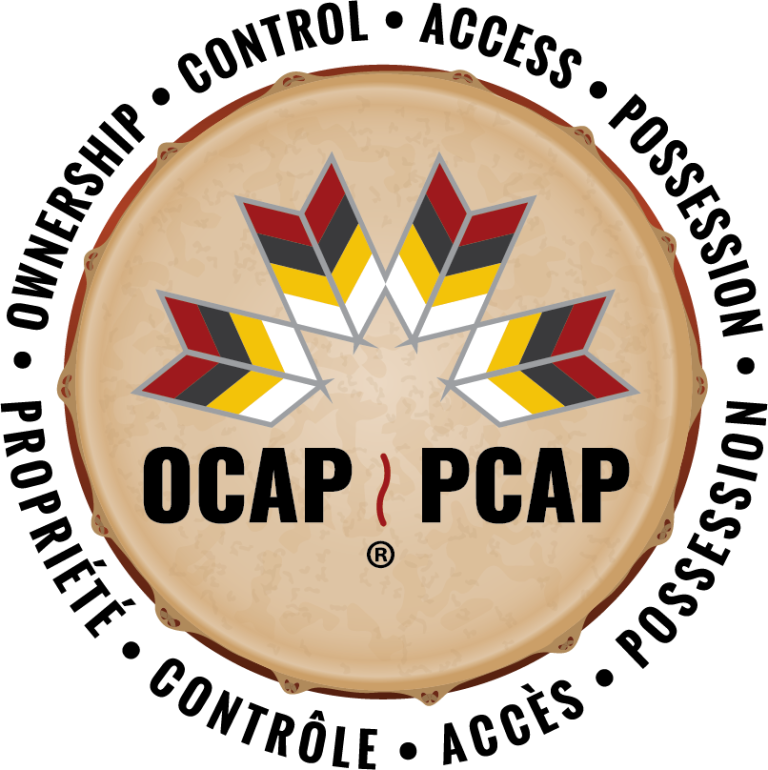
Learn how ownership, control, access, and possession guide Indigenous data rights.
Are you an Indigenous, Inuit, or Métis worker?
All indigenous workers in Canada are invited to join the National Committee on Indigenous Labour. Stay up to date on workers’ rights and contribute your experience to our research.